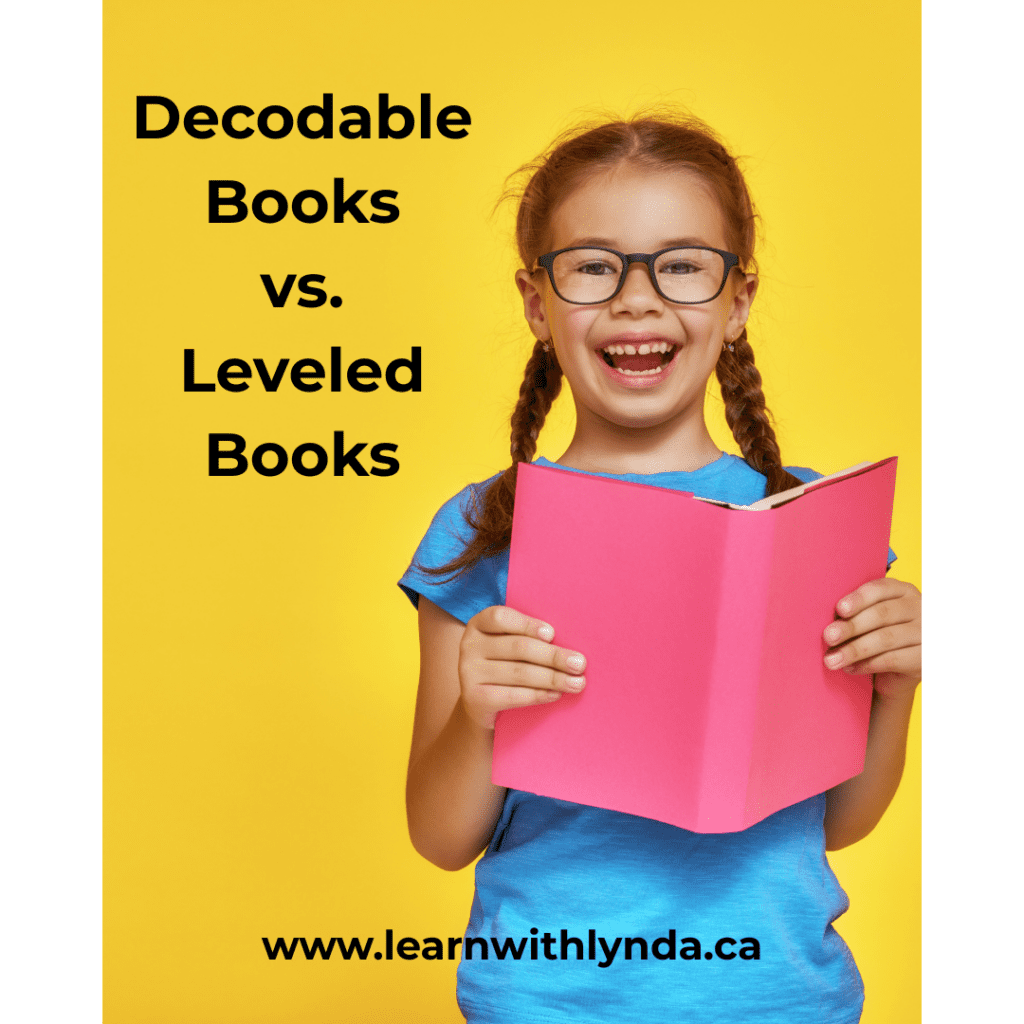
I need to confess. I still have boxes of leveled books in my home office. Early in my teaching career, I relied on them to support beginning readers. However, over the last ten years, I have committed myself to learning more about how children learn to read. As a result, I now use decodable books with my early readers.
That shift changed everything.
What Are Decodable Books?
Authors design decodable books so children can accurately read them using the phonics skills they have already learned. Instead of filling pages with random words, writers carefully choose words that match specific phonics patterns students have been taught.
Because of this, children can practice reading successfully. I like to think of this as purposeful practice.
What Are Leveled Books?
Teachers typically select leveled books based on reading levels such as A–Z. These books often include predictable text, repeated sentence patterns, and many words that encourage children to guess using pictures or context clues.
Once a student has mastered foundational phonics skills, leveled books can absolutely have a place. However, they are not ideal for building those foundational skills in the first place.
5 Reasons Decodable Books Are Better for Early Readers
1. They Build Strong Word-Reading Skills
Beginning readers make the most progress when they apply phonics skills directly in text rather than guessing words from pictures.
When children read decodable books, they use letter-sound knowledge to decode words independently. As a result, word recognition and fluency improve naturally.
Most importantly, skilled reading begins with accurate decoding. Decodable books give students text they can successfully read using the skills they already know.
2. They Reduce Guessing and “Strategy Overuse”
In many leveled books, children rely heavily on pictures or sentence meaning to guess unknown words. For example, a child might see a picture of a dog and say “dog” when the word actually says “dig.”
In contrast, decodable books guide students to look closely at letters and sounds. Instead of guessing, children learn to analyze the word in front of them.
Research shows that encouraging guessing strategies — especially in the early stages — can slow reading progress because children do not get enough decoding practice.

3. They Strengthen Phonics Instruction
The science of reading reminds us that reading is not a guessing game. Rather, it develops through strong phonics, vocabulary, fluency, and comprehension.
Decodable books align closely with structured phonics instruction. After explicitly teaching a skill, teachers can immediately provide meaningful reading practice that reinforces it.
Because students apply the skill right away, learning becomes stronger and more lasting.
4. They Build Confidence and Motivation
When books match what students know, success follows.
Children experience independence. They feel capable. As a result, motivation grows.
This is especially important for struggling readers. When students can read accurately on their own, their confidence increases — and confident readers read more.
5. Decoding Skills Transfer to New Texts
Over time, repeated decoding practice builds automatic word recognition. Once decoding becomes automatic, students can shift their focus to comprehension.
As a result, children can read a wider range of books with greater understanding.
Decodable Books I Use With My Early Readers
If you are looking for strong options, here are a few I recommend:
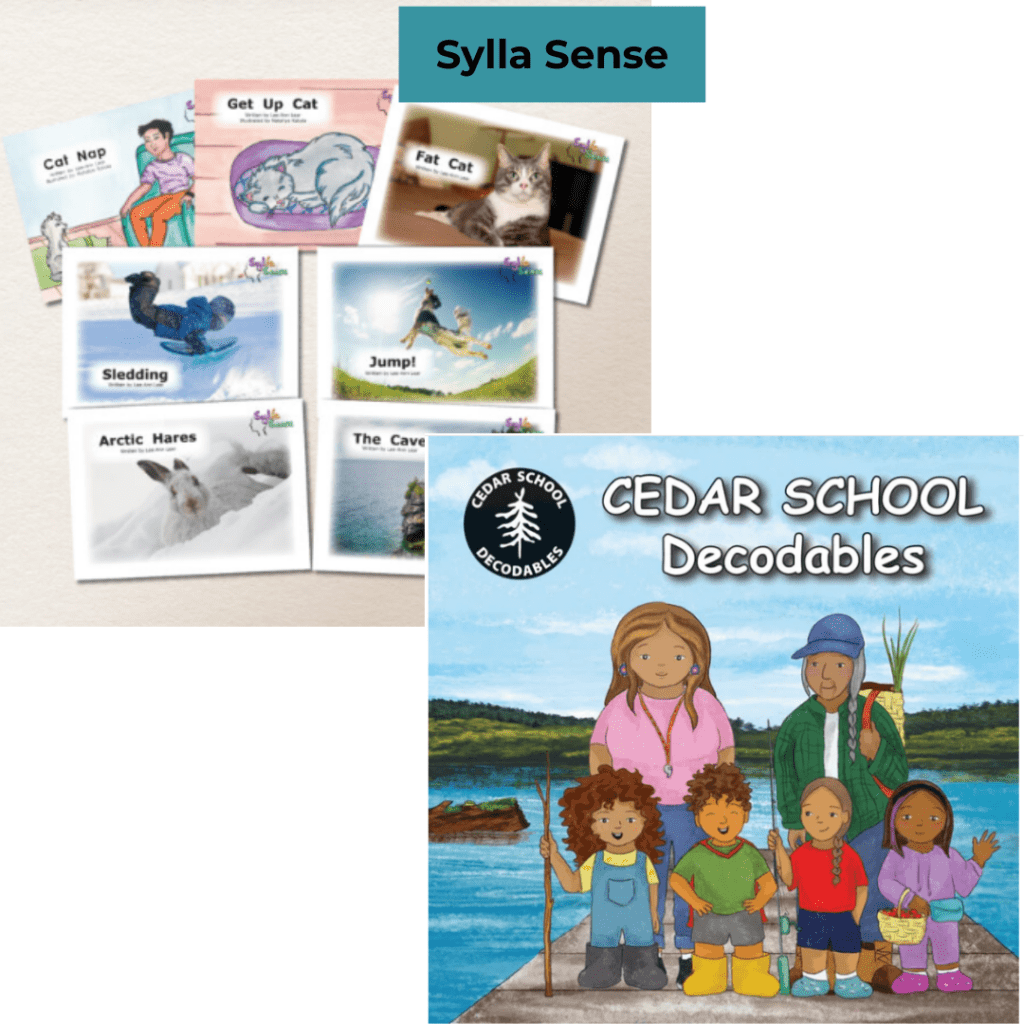
Shttps://syllasense.com/shop-single-sets/yllaSense – My students love the colourful images (some books use photos while others include illustrations). I also appreciate that a classroom educator created the series.
Bob Books – The simple illustrations help students focus on the text instead of the pictures.
Cedar Book Decodables – Students enjoy following the same group of characters throughout the series. I especially value the connection to Indigenous ways of knowing.
Half-Pint Kids – This series offers a free digital library of decodable books, which makes it accessible for families.
The https://reachallreaders.com/free-decodable-books/Measured Mom Decodables – These printable books include both colour and black-and-white options.
Happy Learning,
Lynda